
Stepping onto a cold kitchen floor on a dark January morning is enough to make anyone consider underfloor heating. It's one of the most searched home heating upgrades in Ireland right now, and for good reason. Even warmth, no radiators cluttering the walls, and lower running costs when paired with a heat pump.
For most Irish homes, electric underfloor heating starts from around €50 per square metre (materials only), while wet (hydronic) systems start from roughly €80 per square metre before labour. A typical single-room electric installation might cost €600 to €1,500 all in, while a whole-house wet system can run from €3,000 to €7,000 or more depending on size and complexity.
Those figures shift depending on whether you're fitting it into a new build, adding it during a full home renovation, or retrofitting into an existing floor. Below, we'll break down what drives the cost, which system suits different situations, and where grants might help.
Electric Vs Wet Underfloor Heating: Which Costs More?
There are two main types of underfloor heating, and the price gap between them is significant.
Electric systems use thin heating mats or cables laid directly beneath the floor finish. They're cheaper to buy and quicker to install. Materials typically cost €50 to €100 per square metre, and a qualified electrician can usually fit a single room in a day or two. They're ideal for smaller spaces like bathrooms, en-suites, and utility rooms where you want targeted warmth rather than whole-house heating.
The catch? Electricity is more expensive per kWh than gas or oil, so running costs are higher over larger areas.
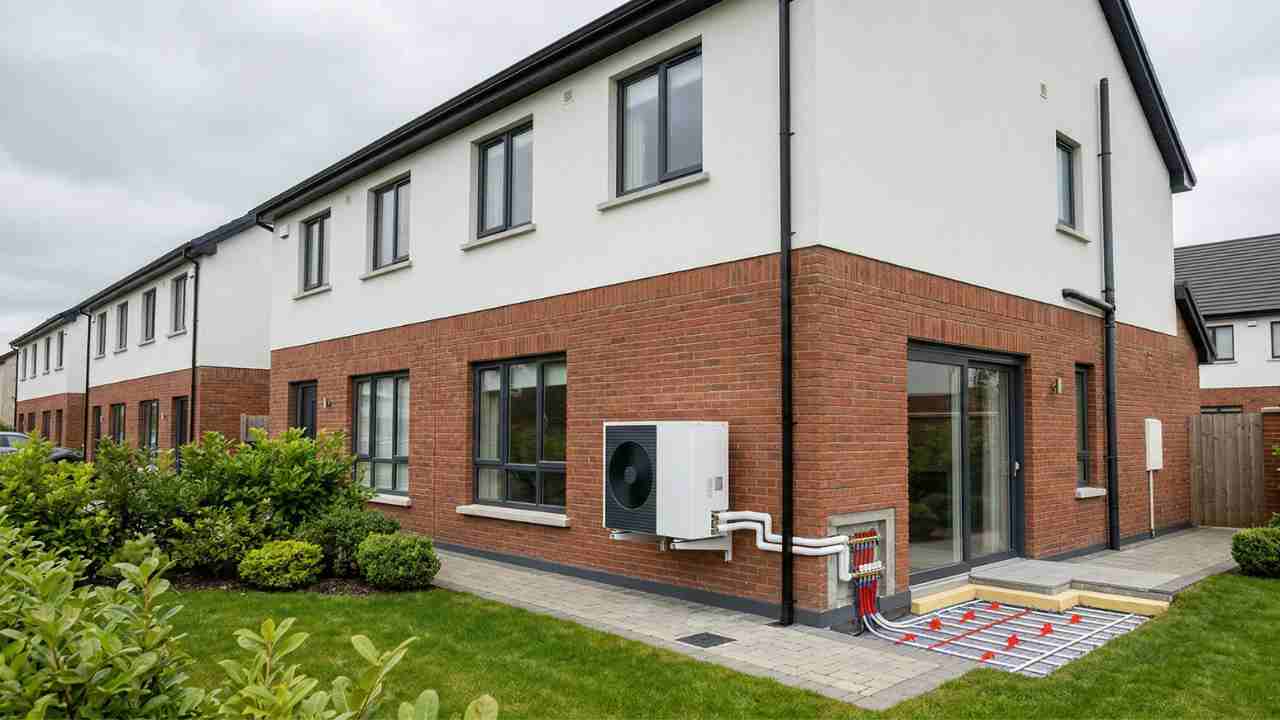
Wet (hydronic) systems circulate warm water through a network of pipes embedded in a screed layer under the floor. Materials start from around €80 per square metre, but total installed costs are higher because of the screed, manifold, plumbing connections, and longer installation time. The payoff is much lower running costs, especially when paired with a heat pump or modern condensing boiler.
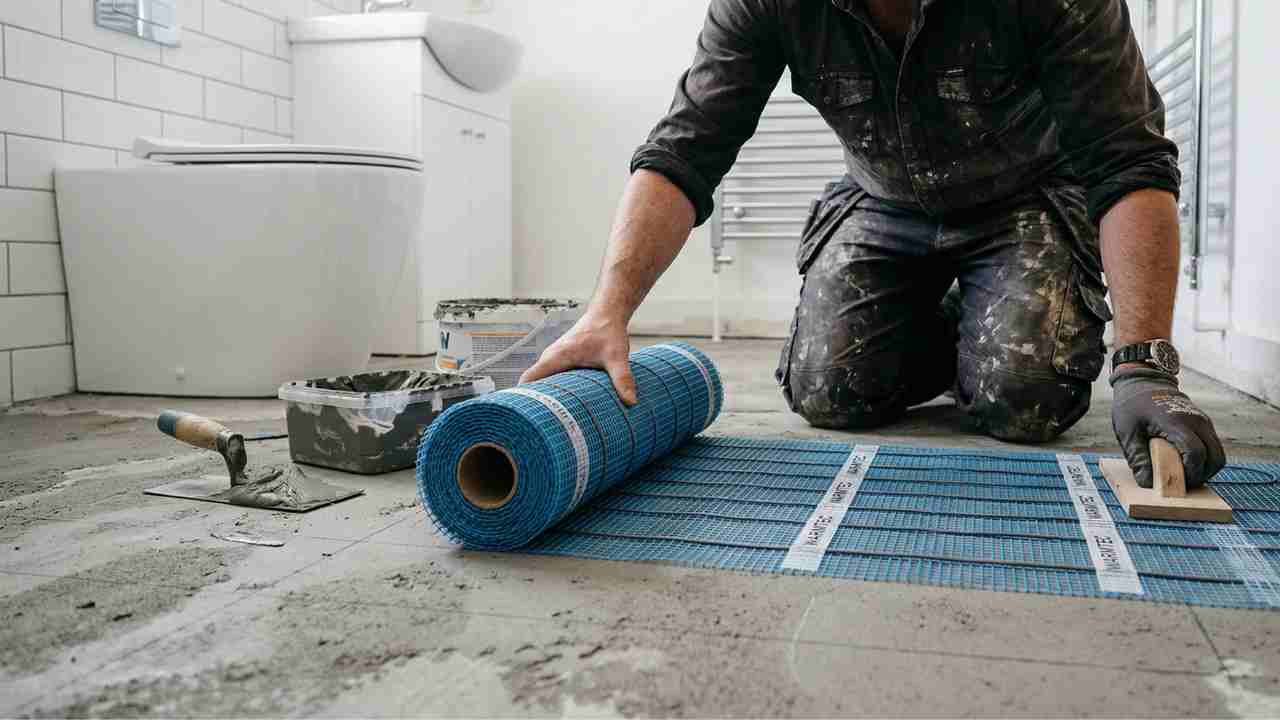
For a quick comparison, a 10m² bathroom with electric underfloor heating might cost €800 to €1,200 fully installed. The same room with a wet system could cost €1,500 to €2,500, though running costs would be noticeably lower over time.
What Affects Underfloor Heating Prices in Ireland?
No two projects are alike. Here are the main factors that push the final bill up or down.
New Build Vs Retrofit
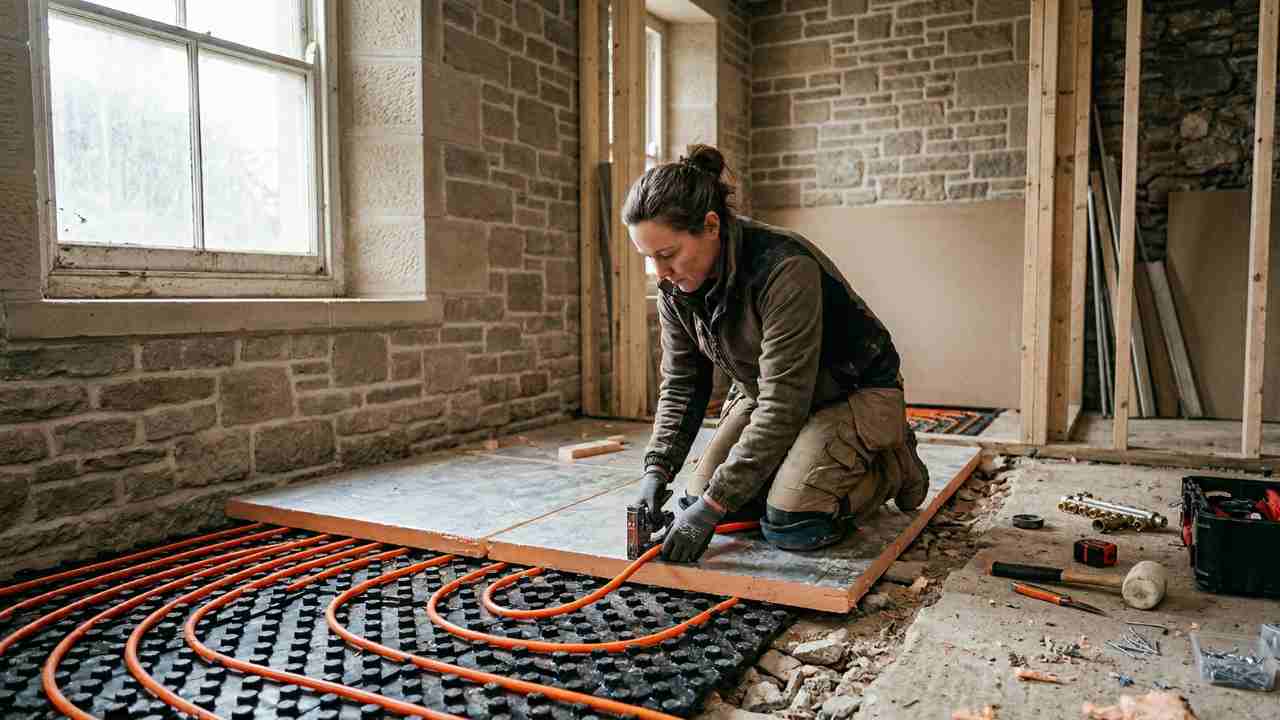
Installing underfloor heating during a new build is considerably cheaper than retrofitting. In a new build, the pipes or mats go in before the screed is poured, so there's no extra floor removal or height adjustment needed. Retrofitting into an existing home often means lifting the current floor, adding insulation, laying the system, and screeding on top, which adds both cost and time. If you're already planning an extension or renovation, that's often the most cost-effective moment to add underfloor heating.
Room Size and Layout
Bigger rooms cost more in materials, but the per-square-metre rate often drops as the area increases. Irregular layouts or rooms with lots of fixed furniture can complicate the pipe layout for wet systems, adding to labour time.
Floor Build-Up and Insulation
Proper insulation beneath the heating system is non-negotiable. Without it, heat escapes downward into the subfloor instead of rising into the room. The cost of insulation boards and screed adds to the total, but skimping here wastes energy and money in the long run. If your home's insulation is already poor, it's worth addressing that as part of the same project to get the most from your underfloor system.
Best Flooring for Underfloor Heating in Ireland
Not every floor covering works equally well with underfloor heating. The floor's ability to conduct heat matters enormously.
- Ceramic and porcelain tiles. By far the best option. They conduct heat efficiently and hold warmth well. Perfect for kitchens, bathrooms, and hallways.
- Natural stone. Limestone, slate, and granite all work brilliantly with underfloor heating, though they take slightly longer to warm up.
- Engineered wood. A solid choice for living rooms and bedrooms. Stick to engineered (not solid) timber, as it handles temperature changes without warping.
- Laminate and vinyl (LVT). Both work well provided they're rated for use with underfloor heating. Check the manufacturer's maximum temperature limit.
- Carpet. Possible but not ideal. Thick carpet and underlay act as insulation above the heating, reducing efficiency. If you must use carpet, keep the tog rating below 1.5.

Whatever you choose, always confirm the product is rated for underfloor heating use. The wrong flooring can crack, warp, or simply block the heat from reaching the room.
Can You Retrofit Underfloor Heating Into an Existing Home?
Yes, but it costs more and takes more planning than a new-build installation.
Electric systems are the easier retrofit option. The mats are thin (often just 3mm to 4mm), so they add very little height to the floor. They can be laid directly onto an existing subfloor, covered with tile adhesive, and tiled over. For a single bathroom or kitchen, this is often the most practical approach.
Wet systems in a retrofit are more involved. The pipework sits in a screed layer that typically adds 50mm to 75mm to the floor height. That can create problems with door clearances, step-downs between rooms, and skirting boards. Some low-profile wet systems reduce this to 15mm to 20mm, but they come at a premium. If you're planning a deep retrofit or major renovation, that's usually the right moment to consider a whole-house wet system because the floors will already be coming up.
SEAI Grants and Underfloor Heating: What Can You Claim?
There's no standalone SEAI grant specifically for underfloor heating on its own. However, if you're installing a heat pump system, the upgraded Heat Pump System Grant (as of February 2026) includes up to €2,000 for central heating component upgrades, which covers new radiators or underfloor heating where required as part of the heat pump installation.
The full heat pump bundle can reach up to €12,500 for eligible homes, made up of up to €6,500 for the heat pump itself, up to €2,000 for central heating components, and a €4,000 Renewable Heat Bonus for homeowners replacing an oil, gas, or solid fuel system. Your home must have been built and occupied before 2021, and you'll need to use an SEAI-registered contractor.
Pairing underfloor heating with a heat pump makes strong financial sense. Heat pumps operate most efficiently at lower water temperatures (35°C to 45°C), and underfloor heating is specifically designed for exactly that range. Radiators, by contrast, were built for higher temperatures. So the combination doesn't just feel better; it runs cheaper too.
Ready to Get a Quote for Underfloor Heating?
Underfloor heating is one of those upgrades that genuinely changes how a home feels. Whether you're fitting electric mats in a single bathroom or running a full wet system through a new build, the comfort difference is hard to overstate.
BuildTech installs both hydronic and electric underfloor heating systems across Dublin, the Greater Dublin Area, and the West of Ireland. As an SEAI-registered contractor, the team can also help with heat pump installations and grant applications to make the project more affordable. Get in touch with BuildTech today for a no-obligation consultation and a fixed-price quote.
Frequently Asked Questions
How much does electric underfloor heating cost in Ireland?
Electric underfloor heating materials typically cost between €50 and €100 per square metre. With installation, a single room like a bathroom usually comes to around €600 to €1,500, depending on size and complexity.
Is wet or electric underfloor heating better for a whole house?
Wet (hydronic) systems are better for whole-house heating because they have lower running costs, especially when connected to a heat pump. Electric systems are more practical for individual rooms or smaller spaces.
Can underfloor heating be installed in an older Irish home?
Yes, it can. Electric mats are the easiest option as they add minimal floor height. Wet systems are possible during a major renovation but require more planning around floor levels and insulation.
Does underfloor heating work with carpeted floors?
It can, but carpet acts as an insulator and reduces how efficiently heat reaches the room. If you want underfloor heating with carpet, keep the total tog rating of the carpet and underlay below 1.5 for best results.
Are there any SEAI grants for underfloor heating in Ireland?
There's no standalone grant for underfloor heating alone. However, if you're installing a heat pump, the SEAI Heat Pump System Grant (up to €12,500) includes up to €2,000 for central heating upgrades, which can cover underfloor heating.
How long does underfloor heating take to install?
Electric systems can usually be installed in one to two days per room. Wet systems take longer, typically three to five days for a single room, as they require pipework, manifold connections, and screed that needs time to cure.
