Skip to content
Getting a house extension is exciting. You finally get the extra space you’ve been craving, whether that’s a bigger kitchen, a proper living area, or a home office that isn’t crammed into the spare bedroom. But there’s one thing that trips up a lot of homeowners in Ireland: they spend months planning the build itself and barely think about the interior design until the walls are already up.
Planning the interior design of your house extension before construction begins is one of the smartest things you can do. It means your layout, lighting, materials, and finishes all work together from day one, rather than being bolted on as afterthoughts. A well-designed extension should feel like a natural part of your home, not a box stuck on the back.
In this guide, we’ll walk through the practical steps for getting your extension’s interior design right, from early layout decisions and material choices through to lighting, storage, and knowing when to call in professional help.
Why Should You Plan Interior Design Before Construction Starts?
Too many homeowners treat interior design as something that happens after the build is done. That’s a costly mistake. Decisions about socket placement, plumbing points, underfloor heating zones, and even where your kitchen island sits all need to be locked in before the foundations are poured.
If you wait until construction is underway to think about finishes and layout, you’ll end up paying for changes that could have been avoided. Moving a radiator or re-routing plumbing mid-build adds time and money that nobody budgets for.
Starting the design process early also gives you time to source materials, compare options, and make decisions without pressure. Rushing those choices in the final weeks of a build is how people end up with finishes they regret. BuildTech’s guide to designing a home extension layout covers the structural side of this in more detail, and it’s worth reading alongside your interior planning.
How Do You Get the Layout Right?
Layout is everything. It determines how your extension feels to live in, not just how it looks. Start by thinking about what you actually need the space to do. Is it primarily for cooking and eating? Working from home? Family time? That answer should drive every layout decision.
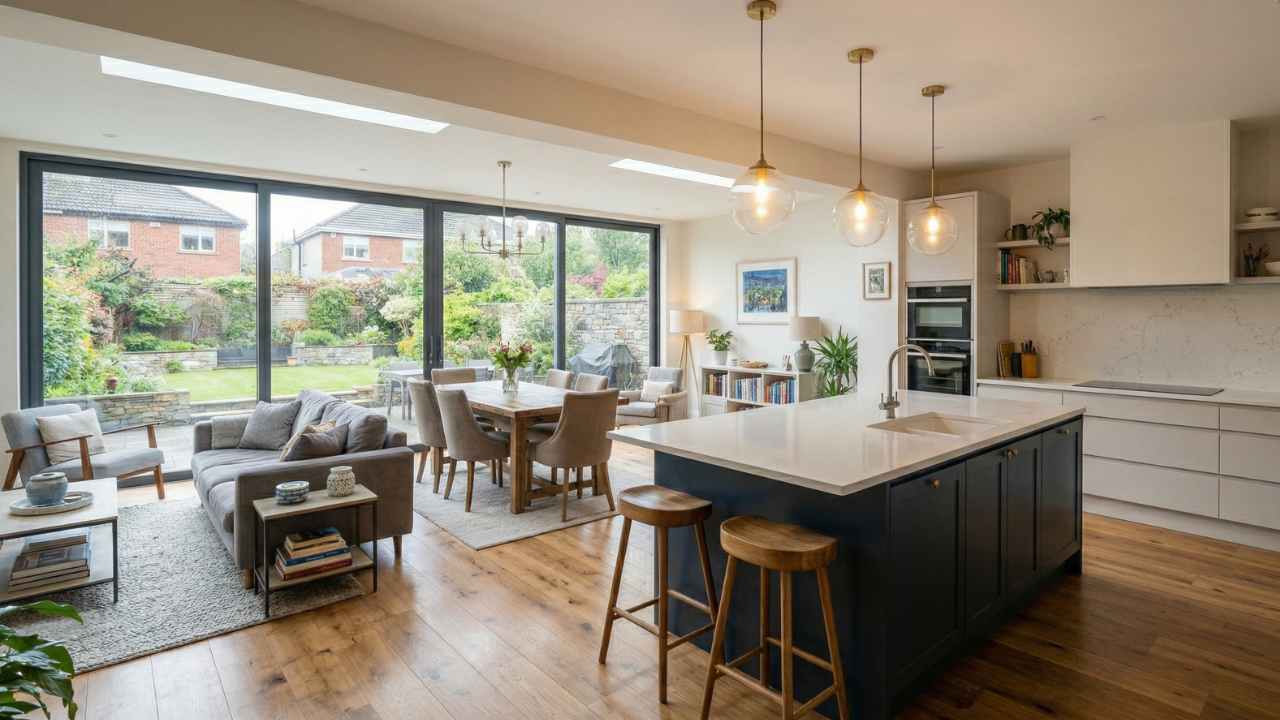
Open-plan layouts are hugely popular in Irish extensions, and for good reason. They make smaller footprints feel generous and let natural light travel further into the house. But open-plan doesn’t mean one giant room with no definition. Think about zones: a cooking zone, a dining zone, a sitting zone. You can separate these with furniture placement, changes in flooring, or even a slight level change.
Flow Between Old and New
One of the trickiest parts of any extension is making the new space connect properly with the existing house. The transition between old and new should feel smooth, not jarring. Think about sightlines from the hallway or existing rooms into the extension. If you’re knocking through a rear wall to create an open-plan kitchen, consider how the original house’s proportions sit alongside the new space.
Your architect can help with this, especially if they’re producing 3D models of the proposed design. BuildTech’s in-house team creates virtual tours that let you walk through the space before a single block is laid, which is incredibly useful for catching layout issues early.
How Do You Choose Materials and Finishes That Last?
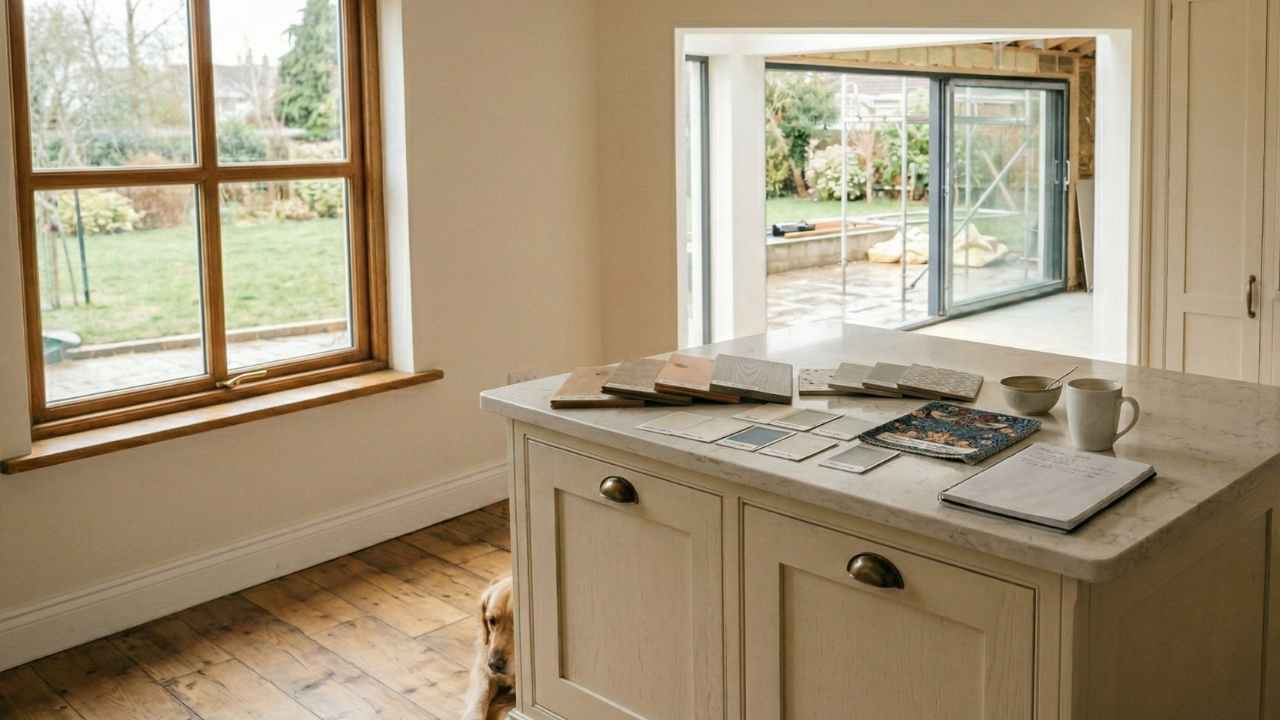
Choosing materials for an extension is about balancing looks, durability, and budget. It’s tempting to go all-out on premium finishes, but you need to be realistic about how the space will be used. A family kitchen with young kids has different needs to a quiet home office.
For flooring, timber and engineered wood remain popular choices in Irish homes. They’re warm underfoot, work well with underfloor heating, and age nicely. Porcelain tiles are another solid option, especially in high-traffic kitchen areas. They’re practically indestructible and come in finishes that convincingly mimic natural stone or concrete.
When it comes to budgeting for your extension, don’t forget that fittings and fixtures can eat up a surprising chunk of the total cost. Kitchens, bathrooms, flooring, and lighting all add up quickly. It’s worth setting aside 15% to 20% of your overall budget specifically for interior finishes and fittings.
What Lighting Layout Works Best in an Extension?
Lighting can make or break an extension. Get it wrong and the most beautifully designed room will feel flat and lifeless once the sun goes down. Get it right and even a modest space will feel warm, inviting, and properly finished.
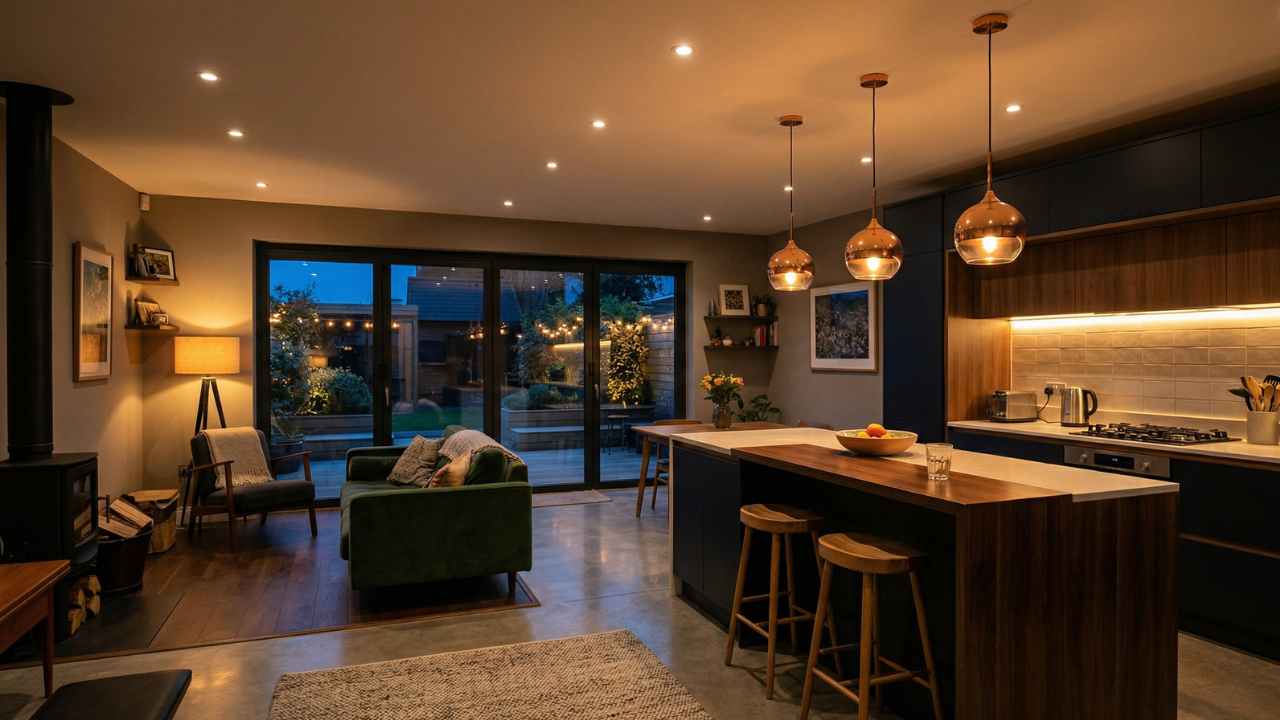
Think in layers. You need ambient lighting (your general overhead light), task lighting (over the worktop, the island, or a reading nook), and accent lighting (to pick out features or create mood). Dimmer switches are a small investment that make a massive difference, giving you control over the atmosphere throughout the day.
For extensions with large glazed areas or bi-fold doors, plan for what happens after dark. During the day, natural light does the heavy lifting. But at night, all that glass becomes a black mirror unless you’ve got a proper lighting scheme to compensate. Recessed downlights, pendant fixtures, and well-planned electrical layouts need to be decided at the design stage, not as an afterthought.
- Recessed downlights for even ambient coverage across the ceiling.
- Pendant lights over islands or dining tables for visual interest and focused task lighting.
- Under-cabinet LED strips in kitchens for practical worktop illumination.
- Wall-mounted or floor-level lights to add warmth and depth in living zones.
- Exterior lights near sliding doors or patios to extend the visual space at night.
How Do You Plan Storage Without Ruining the Design?
Storage is one of the most overlooked parts of extension interior design. Everyone wants clean lines and uncluttered surfaces, but that only works if you’ve planned enough storage to actually keep things tidy.
Built-in storage is almost always better than freestanding furniture in an extension. It uses space more efficiently and gives a cleaner, more finished look. Think about deep drawers instead of base cabinets in kitchens, floor-to-ceiling joinery for utility areas, and built-in shelving or window seats with hidden compartments in living zones.
If you’re planning an open-plan space, consider a utility room or boot room tucked behind the kitchen. It gives you somewhere to hide the washing machine, tumble dryer, and all the general clutter that has no business being in a show-ready kitchen. Even a small space of 4 to 5 square metres can work.
When Should You Bring in a Professional Designer?
You can do a lot of interior design planning yourself, especially if you know what you like and have a clear idea of how you want to use the space. But there are times when a professional is worth every cent.
If you’re struggling to decide on a layout, can’t visualise how materials will work together, or just feel overwhelmed by the number of decisions, an interior designer can cut through the noise. They’ll also spot issues you might miss, like sightlines that don’t work, colour palettes that clash with existing rooms, or storage solutions you hadn’t considered.
BuildTech’s integrated design and build approach means your interior designer, architect, and construction team all work under one roof. That’s a big advantage because design decisions don’t get lost in translation between separate firms. You can see how everything comes together through their structured architectural design process, which covers every stage from concept to construction-ready plans. The team also produces realistic 3D models and virtual tours, so you can walk through your extension before the build even starts.
Getting the interior design of your extension right takes planning, patience, and a willingness to make decisions early. But the payoff is a space that feels like it was always part of your home, not something that was added on. If you’re ready to start planning your extension, get in touch with BuildTech on buildtech.ie or call 0818 333 443 for a free consultation.