Skip to content

If your heating bills keep climbing and rooms feel cold no matter how long the boiler runs, insulation is usually where the biggest savings hide. The good news is you don’t need to spend a fortune to make a real dent in energy loss. For most Irish homes, the best budget home insulation in 2026 is attic insulation, followed closely by cavity wall insulation where the walls allow it.
Both jobs are quick, cause very little mess, and qualify for SEAI grants that can cover a large chunk of the cost. In many cases, homeowners see payback within two to five years through lower energy bills.
Below we walk through the main options, what they typically cost, what grants are available, and how to prioritise the work if your budget is tight.
Which Insulation Gives the Best Value for Money?
Attic insulation gives the best return per euro spent in almost every Irish home. Heat rises, so up to a quarter of the warmth in an uninsulated house escapes straight through the roof. Topping up attic insulation is fast, low-cost, and delivers noticeable comfort within days.
Here’s how the main options generally rank on value:
- Attic insulation is the cheapest per square metre and the fastest to install. Grant support brings the net cost down further.
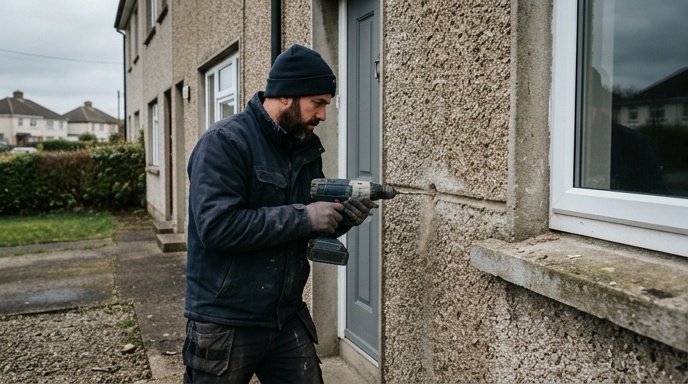
- Cavity wall insulation is next best value if your home was built with a cavity (most Irish homes from the 1940s onward). It’s pumped in through small holes and finished in a day.
- Drylining (internal wall insulation) costs more but works well for solid-wall homes or houses where external work isn’t practical.
- External wall insulation gives the best thermal performance but sits at the top end of the budget.
- Floor insulation is worth doing during a renovation but rarely a standalone budget job.
If you only have money for one measure, start at the top of that list and work down. You can check current grant amounts and eligibility on the SEAI home energy grants page before committing.
How Much Does Attic Insulation Cost in 2026?
Attic insulation is the entry point for most homeowners on a budget. A standard three-bed semi typically costs between €1,200 and €2,500 to insulate, depending on the size of the loft, the type of material used, and whether the existing insulation needs removing first.
There are two common approaches:
Rolled Mineral Wool
This is the standard budget option. Rolls of mineral wool are laid between and over the ceiling joists to a depth of around 300mm. It’s cheap, effective, and easy to install. Most jobs are done in a single day.
Blown Cellulose or Fibre
Loose fill is blown across the attic floor, filling awkward gaps that rolls can’t reach. It costs a little more but gives better coverage in older, uneven attics.
SEAI grants for attic insulation currently sit around €1,300 to €1,700 for a typical detached or semi-detached home, which often covers most of the job. That’s why it’s the first measure we recommend to anyone tightening their energy budget.
Is Cavity Wall Insulation Worth It?
Yes, it is worth it in nearly every home that has a suitable cavity. Uninsulated walls account for roughly 35% of heat loss in an older Irish home, and pumping bonded bead or mineral fibre into the cavity is one of the quickest wins you can get.
Cavity wall insulation cost generally lands between €1,500 and €3,000 before grants. SEAI support usually covers a large portion of this, depending on the size and layout of the home. Payback often falls within three to five years through reduced heating bills.
A few things to check before booking:
- Your home must have a genuine cavity. Solid stone or single-leaf block walls are not suitable.
- The cavity must be clean and free of rubble or debris.
- The installer should carry out a borescope inspection before quoting.
- Work must be done by an SEAI-registered contractor to qualify for the grant.
What About Drylining and Internal Wall Insulation?
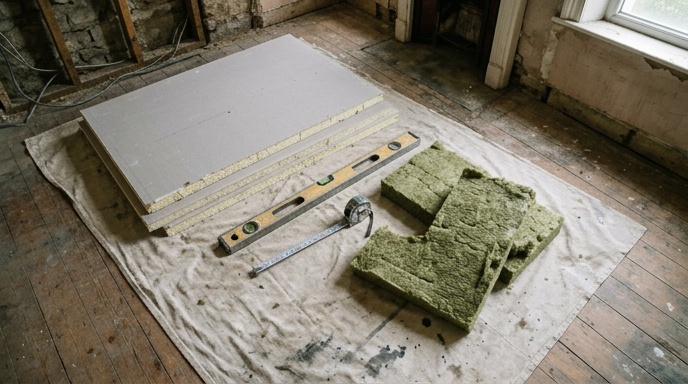
Drylining involves fixing insulated plasterboard to the inside face of your external walls. It’s a mid-budget option that suits solid-wall homes, cottages, and properties where external work would damage the appearance or run into planning issues.
Expect to pay in the region of €40 to €70 per square metre installed, depending on the board thickness and finish. A typical room might cost €2,500 to €4,500, and a full house drylining project runs considerably higher.
Pros of Drylining
- Works on any wall type, cavity or solid.
- Improves fire resistance because plasterboard is fire-rated.
- Reduces condensation and helps with sound insulation between rooms.
- Can be done room by room to spread the cost.
Trade-Offs to Consider
- You lose a small amount of floor space, usually 50 to 100mm off each external wall.
- Skirting boards, sockets, and radiators need to be moved and refitted.
- Existing decor takes a hit, so it’s best done during a renovation.
Drylining isn’t the cheapest measure on a per-square-metre basis, but if cavity insulation isn’t an option, it’s often the most practical way to warm up a solid-wall home without external scaffolding.
How Do You Stack SEAI Grants to Cut Costs?
Under the 2026 National Residential Retrofit Plan, SEAI grants stack. That means you can claim separate grants for attic, cavity, heat pump, and other measures on the same home, either one at a time or as part of a bundled deep retrofit.
There are two main routes:
1. Individual Energy Upgrade Grants
You apply for each measure separately and manage the works yourself. This suits homeowners on a tight budget who want to spread jobs over time. You pick a registered contractor, get the work done, and claim the grant back after completion.
2. One Stop Shop Deep Retrofit
A single provider manages everything: assessment, design, grant applications, and installation. Combined grants for a full deep retrofit typically fall in the region of €25,000 to €30,000, though the exact figure depends on your home. The trade-off is a higher upfront investment because you’re doing multiple measures at once.
You can also explore low-interest home energy loans through participating banks. Confirm current rates and terms directly with your lender.
Which Insulation Should You Do First on a Tight Budget?
The order of works matters as much as the choice of material. Doing things in the wrong sequence can cost you money and leave gaps in performance. Here’s the sequence we recommend for most homes:
- Attic insulation first. Cheapest, fastest, biggest immediate impact on comfort.
- Cavity wall insulation next if your walls are suitable. Quick win with a strong grant.
- Draught-proofing around doors, windows, and letterboxes. Low cost, high impact.
- Floor insulation if you’re already lifting floors during a renovation.
- Drylining or external wall insulation for solid-wall homes or deeper upgrades.
- Heat pump or solar PV once the fabric is sorted.
For a general starter budget of €2,000 to €4,000, you can usually cover attic and draught-proofing outright. Push toward €5,000 to €7,000 and you can add cavity walls. Anything beyond that starts moving into full retrofit territory.
If you’re thinking about a bigger renovation anyway, it makes financial sense to bundle insulation into the works. Our team often advises clients to combine energy upgrades with renovation projects for exactly this reason.

5 Common Mistakes to Avoid
Even a cheap insulation job can go wrong if the basics are missed. These are the pitfalls we see most often in Irish homes:
- Blocking attic ventilation. Insulation must never cover eaves vents. Trapped moisture leads to timber rot within a few years.
- Skipping the water tank. Insulating the attic floor but leaving the tank uninsulated risks frozen pipes in winter.
- Using a non-registered contractor. No SEAI registration means no grant, no matter how good the work is.
- Ignoring damp before insulating walls. Sealing in existing moisture causes mould and blown plaster later.
- Buying on price alone. The cheapest quote often skips essentials like fire barriers or vapour control layers.
Get at least two quotes from registered contractors and ask each for a written scope of works. A good installer will explain exactly what they’re doing and why.
Ready to Warm Up Your Home?
Insulation is one of the few home upgrades where the cheapest option is often the smartest first move. Starting with the attic, then cavity walls, then working outward gives you the biggest gain per euro and sets your home up for bigger upgrades later.
If you’re planning a wider renovation or want advice on the best sequence for your specific home, book a feasibility consultation with our team and we’ll map out a plan that fits your budget and your BER goals.