Skip to content

If you’re planning an extension, renovation, or new home build in Ireland this year, one of the first questions on your mind is what an architect will actually cost you. It’s a fair question, and the answer isn’t always straightforward because fees depend on the size of your project, the level of service you need, and how the architect prefers to charge.
In 2026, architect fees Ireland typically fall between 8% and 15% of the total construction cost for a full service, or a fixed fee ranging from €3,500 to €15,000 for smaller residential projects. Hourly rates sit between €90 and €180 per hour depending on experience and location.
Below, we’ll break down the fee structures, what’s included at each stage, and how to make sure you’re paying a fair price for the service you actually need.
How Architects Charge for Their Work in Ireland
Architects in Ireland generally use one of three fee structures. The right one for your project depends on how well-defined your scope is at the start and how much involvement you want from the architect during construction.
- Percentage of construction cost: usually 8% to 15% of the total build budget, most common for full-service projects.
- Fixed fee: a set price agreed upfront, best when the scope is clear and well-defined.
- Hourly rate: typically €90 to €180 per hour, often used for consultations, small advisory work, or planning support only.
For most home extensions and full renovations, the percentage model is the norm because scope can shift as the design evolves. However, fixed fees are becoming more popular with homeowners who want cost certainty from day one.
Percentage Fees Explained
If your project costs €250,000 to build and your architect charges 10%, you’ll pay €25,000 in architect fees across the full service. That covers concept design, planning drawings, tender documents, and site inspections during construction.
When Fixed Fees Make Sense
Fixed fees work well for straightforward jobs like a rear extension where the layout is agreed early. You know exactly what you’ll pay, and the architect knows exactly what they’re delivering. Just make sure the scope is written down clearly before you sign anything.

What Do Architect Fees Actually Cover in 2026?
One of the biggest sources of confusion is knowing what’s included in the fee. A full architectural service in Ireland typically covers five stages, and each stage carries a portion of the total fee.
- Stage 1: Feasibility and concept design (roughly 15% of the fee).
- Stage 2: Developed design and planning application (roughly 25% of the fee).
- Stage 3: Detailed design and tender documents (roughly 30% of the fee).
- Stage 4: Construction stage inspections and certification (roughly 25% of the fee).
- Stage 5: Final sign-off and handover (roughly 5% of the fee).
Not every project needs all five stages. Some homeowners only hire an architect for planning drawings, then bring in a design-and-build contractor to handle the rest. That’s a legitimate way to keep costs down, but you lose the independent oversight during construction.
4 Typical Architect Fees for Common Project Types
Fees vary widely by project type. Here’s a realistic snapshot of what homeowners around Dublin, Kildare, Meath, and Wicklow are paying in 2026.
1. House Extensions
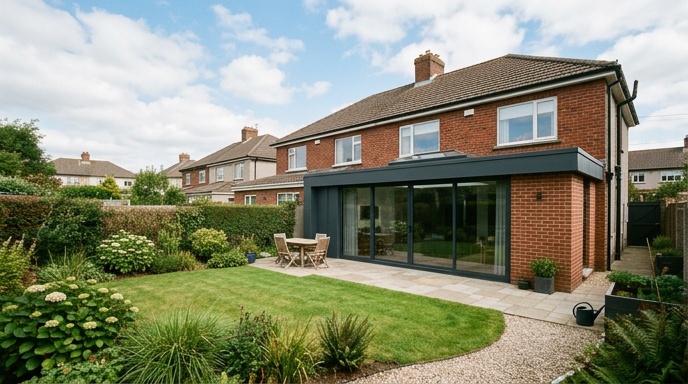
For a standard rear or side extension costing €100,000 to €200,000 to build, architect fees usually land between €8,000 and €25,000 for a full service. A planning-only service is significantly cheaper, often around €3,500 to €6,000.
2. Full Home Renovations
A whole-home renovation is more complex because the architect must consider layout changes, structural implications, and often energy upgrades too. Fees typically range from €15,000 to €45,000 depending on the size of the property and the scope of work.
3. New Home Builds
Custom new builds are the most involved. Expect architect fees of 10% to 15% of construction cost, which for a €500,000 build means anywhere from €50,000 to €75,000. That said, you’re getting design, planning, tender management, and full construction oversight.
4. Attic Conversions and Smaller Projects
For smaller works like an attic conversion, you may only need a technician or architectural designer rather than a fully chartered architect. Fees for planning drawings and compliance documents typically sit around €2,500 to €5,000.
Do You Actually Need an Architect?
Not every project requires a chartered architect. In Ireland, the title architect is legally protected under the Building Control Act 2007, meaning only registered members of the RIAI can use it. However, other qualified professionals such as architectural technologists and building engineers can also produce drawings and manage planning applications.
For straightforward projects, a technologist may be perfectly adequate and considerably cheaper. For complex, design-led projects or listed buildings, a chartered architect is usually the better call.
- Use a chartered architect for design-led projects, listed buildings, or complex planning cases.
- Use an architectural technologist for standard extensions and renovations where the design is relatively straightforward.
- Use a design-and-build contractor if you want a single point of contact from concept through to completion.
The design-and-build route is worth serious consideration if you’d rather not manage separate designers and builders. You can find useful guidance on planning permission and building regulations at Citizens Information, which covers what you need before starting.
How to Keep Architect Fees Under Control
There are a few practical things you can do to stop fees spiralling on your project.
- Get three quotes minimum, and make sure each covers the same scope so you can compare like for like.
- Agree the fee structure and stages in writing before any work begins.
- Be clear on your budget from day one so the architect designs to that number, not to their aspirations.
- Consider a build and structural engineering service if you want cost certainty across the whole project.
- Ask what happens if the design changes mid-project, because revisions are one of the biggest sources of fee creep.
Also, if energy upgrades form part of your project, SEAI grants under the 2026 National Residential Retrofit Plan can offset significant portions of your build cost. Check the current grant amounts at SEAI home energy grants before finalising your budget.
Common Mistakes Homeowners Make With Architect Fees
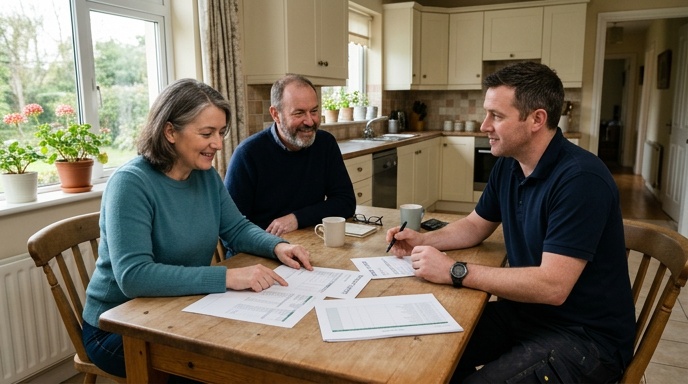
We see the same mistakes come up again and again when homeowners come to us after a bad experience with a designer or architect.
- Hiring based on price alone without checking qualifications or references.
- Not agreeing what happens if the project doesn’t proceed past planning.
- Assuming the architect will project-manage construction when they’ve only been hired for design.
- Skipping the site inspection stage to save money, then having no independent oversight during the build.
- Not budgeting for engineer’s fees separately, which usually add another €1,500 to €4,000 on top.
Getting the fee agreement right at the start saves you thousands and a lot of stress later on.
Ready to Get Clear Costs for Your Project?
Architect fees in Ireland don’t need to be a mystery. Once you understand the fee structure and what’s included at each stage, you can budget with confidence and avoid nasty surprises later.
If you’d rather skip the separate hires and get design, planning, and construction under one fixed price, get in touch with our team through the contact page for a straightforward conversation about your project.