Skip to content
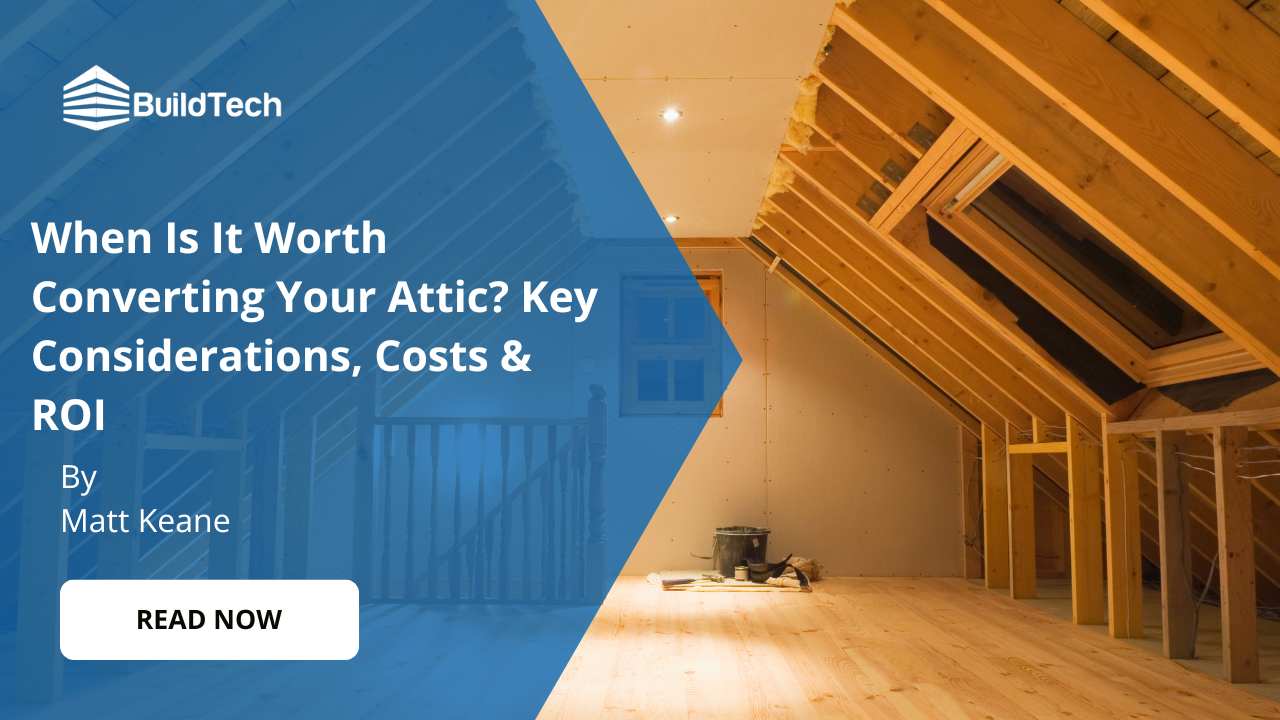
Attic conversions can be a smart way to gain space without extending or moving, but they only work when the roof space and layout allow it.
The right project can add a useful room and improve how your home functions day to day. The wrong one can become an expensive build that still feels cramped.
In this blog,we’ll explain when an attic conversion is worth doing, what to check before you commit, and how costs usually vary by attic size. You will also learn what affects return on investment, from added value to long-term comfort and insulation benefits.
Let’s start!
When Is It Worth Converting Your Attic?
An attic conversion is usually worth considering when it solves a genuine space issue and still makes financial sense for your home and area.
Need for space
When a home starts to feel cramped, the attic is often the only place left to grow without extending outwards. A conversion can give you a bedroom, home office, or playroom while keeping the layout downstairs largely the same.
It tends to suit households that want extra room but do not want the disruption of moving.
Avoiding relocation costs
Moving home comes with a long list of costs that add up quickly. Between stamp duty, solicitor fees, surveys, and estate agent charges, it can feel like paying a premium just to stay in the same area.
Converting your attic can be a more controlled investment, especially if you like your location and only need one extra room.
Strong return on investment (ROI) potential
In areas where property demand is strong, extra usable space can improve resale appeal. Buyers usually value a well-finished conversion that feels like a natural part of the home, not a squeezed-in box room.
ROI depends on the quality of the finish, the type of room you create, and how well the new space fits the rest of the property.
Untapped potential in the existing roof space
Some attics already have the right height and shape to convert with fewer structural changes. If a decent portion of the floor area can be used comfortably, the project becomes more practical and often more cost-effective.
A proper assessment early on helps avoid spending money on designs that are not achievable.
What Are The Key Considerations Before You Start?

Before you commit, it helps to check the practical constraints that affect feasibility, cost, and how smoothly the project will run.
Head height and structure
A conversion needs enough headroom to be comfortable and meet building requirements. The roof structure also affects what is possible, as some roof types are easier to adapt than others.
Getting this checked early can save you from expensive surprises once work begins.
Staircase access
Most conversions require a permanent staircase, and that can influence space on the floor below. The best designs make the stairs feel natural in the home rather than squeezed in as an afterthought.
Planning access correctly is key to keeping the conversion practical and safe.
Planning permission
Some attic conversions may not need planning permission if the external roofline is not changed much.
Dormers and major alterations are more likely to require approval, depending on the property and location. Checking this early helps you avoid delays and redesign costs later.
Building regulations
Even where planning is not required, the conversion still has to meet building regulations. These cover areas such as fire safety, insulation, ventilation, and structural strength.
Following the rules properly also protects the value of the work when it comes time to sell.
Utilities and insulation
A usable attic room needs proper insulation to stay warm in winter and avoid overheating in summer. You may need to extend electrics and heating. Plumbing becomes a bigger consideration if you want a bathroom.
The more services you add, the more important the planning and layout become.
What Is the Average Cost of an Attic Conversion in Ireland?
Attic conversion costs in Ireland usually range from €15,000 to €50,000+, depending on the size of the space, the type of conversion, and whether you add extras like plumbing or a bathroom. A smaller, simpler job will naturally cost less, while larger or more complex builds can climb quickly once structural work and finishes are included.

As a rough guide by size, a small attic (15–25 m²) often comes in around €15,000–€23,000, a medium attic (25–40 m²) is commonly €23,000–€40,000, and a large attic (40 m²+) can sit around €40,000–€60,000+. Many projects also work out at roughly €1,000–€1,600 per m², depending on the specification.
What Is The Return on Investment (ROI) for an Attic Conversion?
A well-planned attic conversion can improve both day-to-day living and the long-term value of your home.
Value increase
A professionally finished conversion can increase a property’s value, mainly because it adds usable internal space.
The impact is usually strongest when the new room feels like a natural part of the home, not an awkward add-on.
Recouping costs
Many homeowners recover a large portion of the conversion spend when they sell, especially in areas with strong demand.
How much you recoup depends on build quality, layout, and whether the extra room adds real function.
Long-term savings
Good insulation and better airtightness can reduce heat loss through the roof, which may lower heating costs over time.
Savings vary, but comfort improvements are often noticed immediately.
Conclusion
A well-planned attic conversion can add valuable living space while improving how your home functions and its long-term value. However, when Is It Worth Converting Your Attic? Key Considerations, Costs & ROI, we explored when a conversion is worth considering, what practical checks to make before starting, typical costs based on attic size, and how ROI can come through added space, comfort, and property value. An attic conversion is usually worthwhile when the space is suitable, the structure and access are workable, and the finished room genuinely improves day-to-day living.
If you want clear advice and a professional plan that suits your property, contact BuildTech to discuss your attic conversion and get a realistic quote based on your home.